
A rebrand checklist is the one document that stops a brand overhaul from coming apart in public. The short version: audit why you're rebranding, set the strategy and goals, build the new identity, test it with real audiences before launch, then roll it out across every touchpoint — on average around 215 assets, over roughly seven months. Get the order right and a rebrand compounds the equity you've already built. Get it wrong and you end up like Tropicana: pulling the new design after a $30M drop in sales.
What is a rebrand — and when do you actually need one?
A rebrand is a deliberate change to how a company is recognised — name, logo, visual system, voice, sometimes the whole brand architecture. It is not a logo tweak you do because you're bored. Most companies run a major rebrand every seven to ten years, with lighter refreshes in between, and it's more common than founders assume: in a survey of 1,002 marketers, 82% said they had worked on a rebrand.
The honest test is whether there's a market reason, not an internal mood. The most common triggers, in that same research, are updating a dated identity (57%), repositioning in the market (45%), reaching a new audience (41%), and fixing a negative perception (26%). If your name no longer tells the right story, your category has shifted, or you've outgrown an identity built for a smaller company — those are real reasons. "The CEO wants a fresh look" is not. If it's a full identity rebuild rather than a refresh, that's brand identity and strategy territory, and the checklist below is how it should run.
What goes on a rebrand checklist? The five phases
Every good rebrand checklist runs in the same order, because each phase depends on the one before it. Skip a step and you pay for it at launch. Here are the five phases, in sequence:
Audit — why now? Name the real reason for the rebrand and what success looks like. Write it down in one sentence. Everything else is judged against it.
Strategy — the brief before any design. Positioning, goals, audience, and the competitive landscape. This is the thinking that makes the design decisions easy later.
Identity — one working system. Name, logo, colour, type, and voice, designed to hold up across every surface they'll touch — not a logo in isolation.
Test — feedback before launch, not after. Put the new identity in front of real customers and stakeholders before it goes live. This is the step everyone is tempted to skip.
Rollout — every touchpoint, consistently. Update the full asset set — website, packaging, social, email, decks, signage, legal — and assign an owner to each so nothing ships with the old mark.
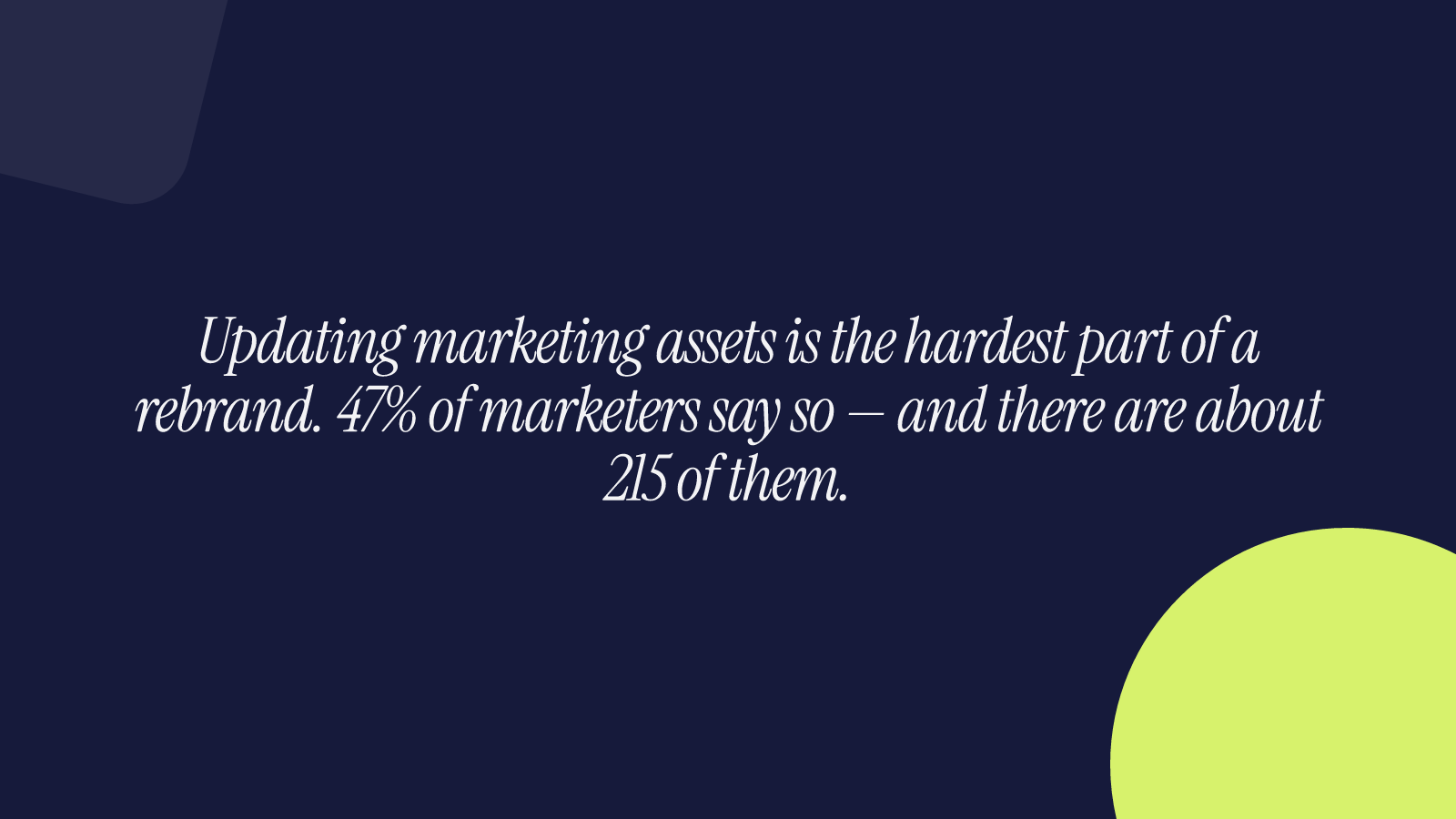
The phase founders underestimate is the last one. A typical rebrand touches around 215 assets and takes roughly seven months from first conversation to full rollout, largely because of that volume. The phase founders skip is testing — and that's the one that turns a rebrand into a headline for the wrong reasons.
What do Gap and Tropicana teach us about rebrands?
Two cautionary tales sit on every studio's shelf. In 2010, Gap unveiled a new logo with zero public testing and pulled it after six days. A year earlier, Tropicana replaced its instantly recognisable orange-and-straw pack — shoppers couldn't find the product, sales dropped by around $30M in under two months, and the brand reverted. Both failures share a cause: internal pressure replaced market research, and recognisable equity was thrown away rather than evolved.
The lesson for your checklist is simple. Test before you launch, and protect the one asset customers actually recognise. The strongest rebrands keep a thread of continuity — an ownable symbol, a colour, a mark — so the brand still feels like itself. That's exactly the principle behind our work on Justach, where a single device carried the identity across every touchpoint instead of a logo doing all the work alone.
How long does a rebrand take, and what should you budget?
Plan for around seven months end to end for a full company rebrand, longer if you're a larger organisation with hundreds of assets and multiple stakeholders to align. Cost varies enormously with scope — a single-product refresh and a multi-market identity rebuild are not the same project — so the useful question isn't "what's the going rate" but "what does our checklist actually include." Map the asset list early; that's what moves the timeline and the number more than anything else.
Thinking about a rebrand?
If you're working through a rebrand checklist of your own and want a studio to run it with you — from the strategy brief to the last asset — start a brief. We work with founders and brand owners globally and remotely, and we'd rather help you evolve your equity than watch you throw it away.